
My RV Awning Won’t Extend or Retract
If your RV awning is not extending, retracting, or doing anything at all, there are a few common places to start before assuming the whole awning is bad. And if you’d rather watch a video of this repair, we’ve got a video walkthrough at the bottom of this page!
In many cases, the problem comes down to one of three things:
A blown fuse
A bad wall switch
A bad awning motor
This guide will walk you through the basic troubleshooting steps so you can narrow down what may be causing the issue.
Before you start, remember that awnings can be under tension, and you may be working around 12-volt electrical components. Only continue if you are comfortable doing basic RV troubleshooting. If something feels unsafe or unclear, or you just want help troubleshooting, RVFix can help you diagnose the issue over a video call with a certified RV technician. Just call 844-667-8349.
What you may need
To troubleshoot your RV awning, you may need:
A replacement fuse of the correct size
A multimeter
A Phillips screwdriver
A #2 square bit screwdriver
Zip ties
A socket and drill for manually retracting the awning, if needed
Important: Do not use an impact gun to retract the awning manually. A regular drill is the safer choice.
Solution 1: Check the awning fuse
The first place to check is your RV’s power center.
Your awning runs on 12-volt power, so if the awning fuse is blown, power will not make it to the switch or motor.
Find your RV’s power center and look for the fuse labeled for the awning. Pull the fuse and inspect it. Inside the fuse, you should see a small U-shaped metal connection.
If that metal piece is still connected, the fuse is likely good, but if you’re unsure, replace it with a fuse of the same amperage or test it with a multimeter.
If it is broken, the fuse is blown
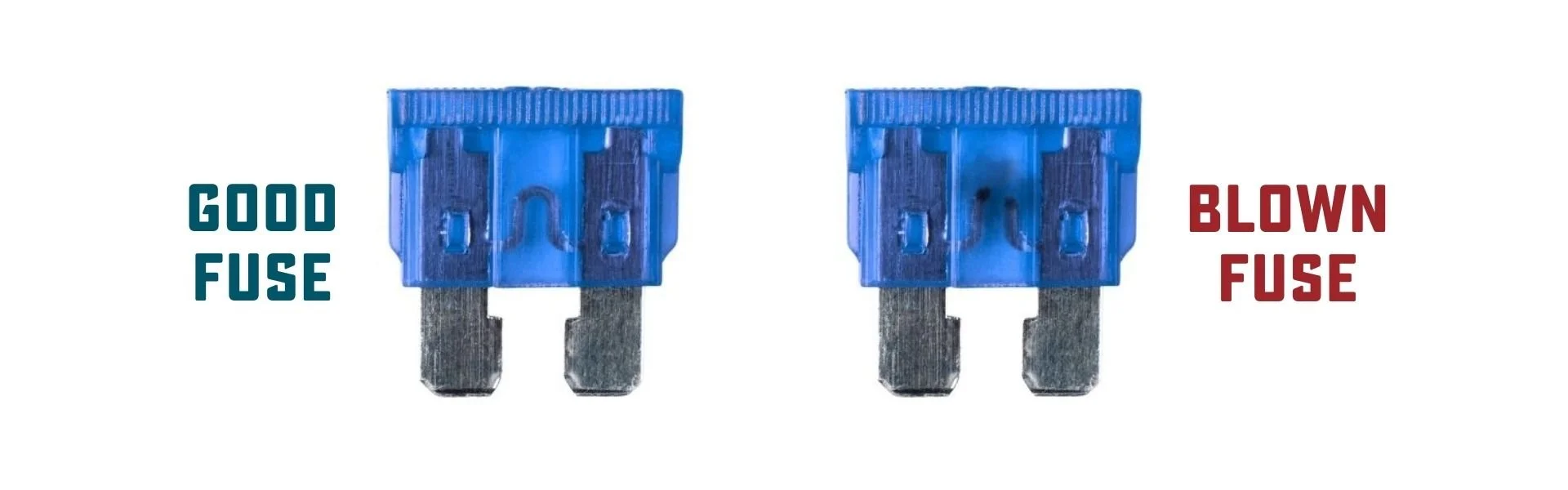
If it’s blown, replace it with a fuse of the same amperage. Then test your awning again.
If the awning works, you may be good to go!
If the new fuse blows again, stop there. A fuse usually blows for a reason, and there may be a short, bad motor, wiring issue, or another electrical problem that needs more diagnosis. In that case, you’ll probably want to call RVFix or another RV technician.
Solution 2: Test the Awning Wall Switch
If the fuse is good and the awning still does not move, the next thing to check is the wall switch.
Most RV awning switches are momentary switches. That means the switch moves to extend or retract the awning, but it returns to the center position when you let go.
To access the switch, remove the small screw caps on the switch plate. (There may be some caps covering the screws, and you should be able to remove those safely with your hands.) Then use a #2-square bit to gently remove the switch from the wall.
Be careful when pulling the switch out. The wires behind the switch may not have much extra slack.
Set your multimeter to DC voltage. On many multimeters, DC voltage is marked with a V and a straight line.
To test voltage, your meter needs two connection points: power and ground. The black probe on your meter goes to ground, which is the return path for the electrical circuit.
On some switches, you may have a ground wire available. But many awning switches only have power and motor wires, so you may need to find a ground nearby.
A few possible ground points may include:
The ground side of a nearby 120-volt outlet (the rounded hole that looks like the mouth of the outlet face)
A known ground wire
A metal frame ground, if accessible
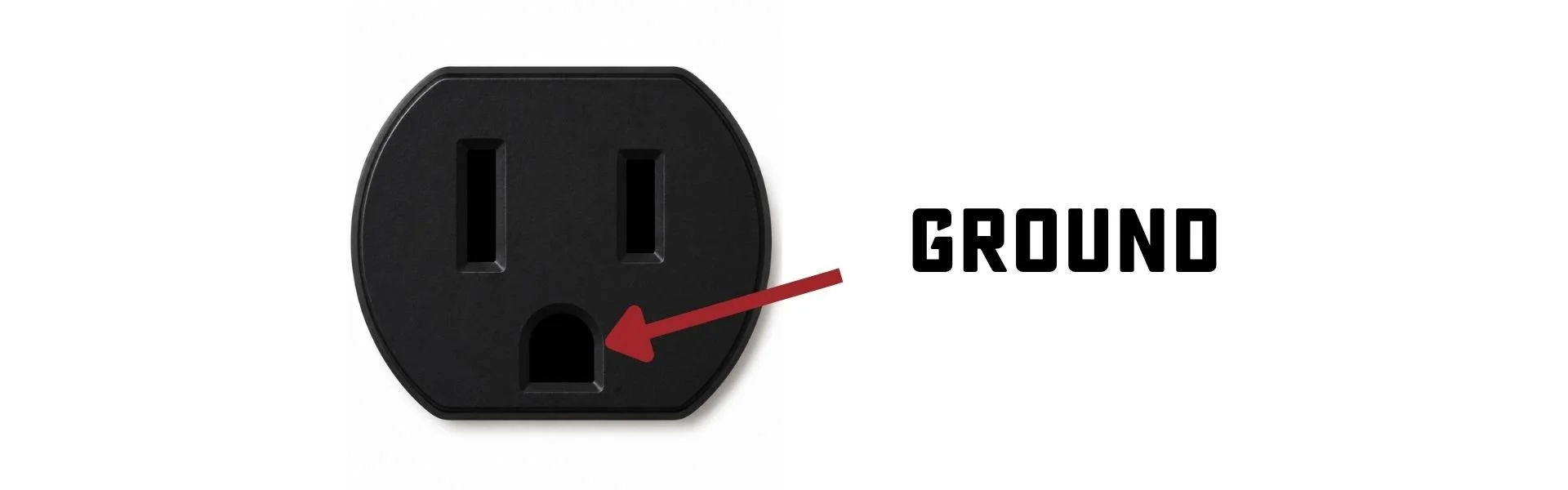
Then, with the black probe on ground, use the red probe to carefully test each wire on the back of the awning switch. One of those wires should show 12-volt power. (If the RV is plugged in or the converter is charging the battery, you may see closer to 13.5 or 13.8 volts.) That is your hot wire, or power feed, coming into the switch.
If you do not find power at any of the switch wires, the problem may be before the switch. That could mean a blown fuse (which you already checked), a wiring issue, a loose connection, or another 12-volt power problem.
After you find the hot wire, the other wires are usually the wires that send power from the switch to the awning motor.
Now hold the switch in the extend position and test the output wire. You should see voltage in one of the output wires when the switch is pressed. Then hold the switch in the retract position and test the other output wire. You should see voltage there, too.
If you see voltage for both the extend and retract, then the switch is most likely not your problem.
You can go ahead and reinstall the wall switch, being careful not to overtighten the screws, as the switch housing is plastic and can crack if you torque it down too hard.
If you have voltage coming into the switch, but don’t see power coming out when you press extend or retract, then the switch is likely bad and will need to be replaced.
Go ahead and give us a call at 844-667-8349, and we can help you get a replacement part, and either schedule you to have a professional replace it, or we can ship it to you and guide you through the installation.
Solution 3: Test the power at the awning motor
If the fuse is good and the wall switch is sending power, the next step is checking whether power is actually reaching the awning motor.
We recommend this third because it’s much more involved than the other two solutions, as you’ll be working up at the awning head.
On many awnings, there is a screw or bolt that holds the awning head to the awning arm. You may need to loosen that screw enough to access the wiring connection behind the awning head.
Be careful here. The wires can be very short, and the awning arm may have strut pressure. If the pressure feels too strong, zip tie the awning arms before continuing.
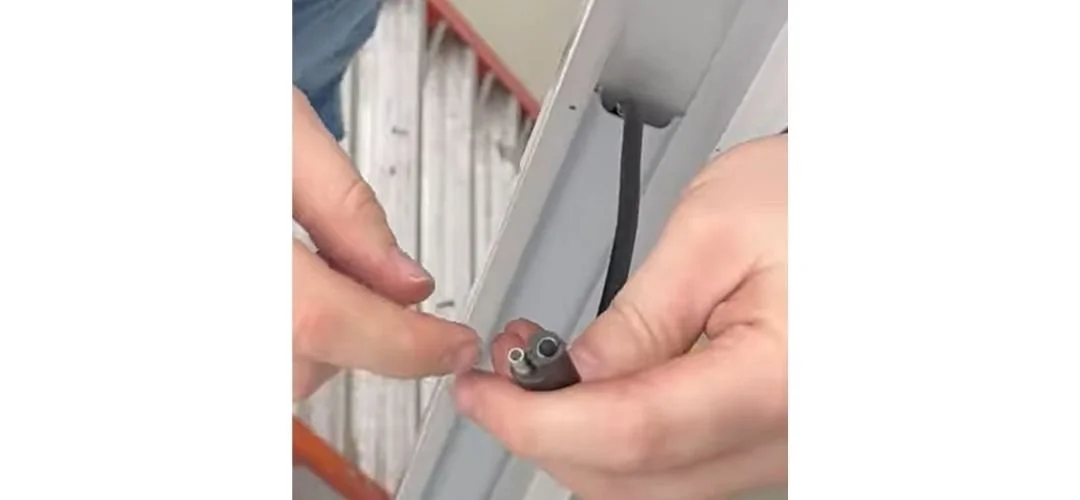
Once you can access the connector, unplug the awning motor wiring. Set your multimeter to DC voltage and place one probe on each side of the connector. Then have someone press the awning switch.
If your problem is that your motor won’t move, but you’re seeing good voltage (again, around 12-13.5V) at the motor connection, you likely have a bad motor, which will need to be replaced.
If you are not getting voltage at the motor, the problem may be in the wiring between the switch and motor, or there may be another connection issue that needs further diagnosis.
Either way, you can call RVFix, and we can help you with the next steps.
How to manually retract your awning
If your awning motor has failed and the awning is stuck out, you’ll likely need to manually bring it in. Even if you are planning on having a mobile technician come out to you, a sudden wind storm can spell big problems if your awning is stuck extended.
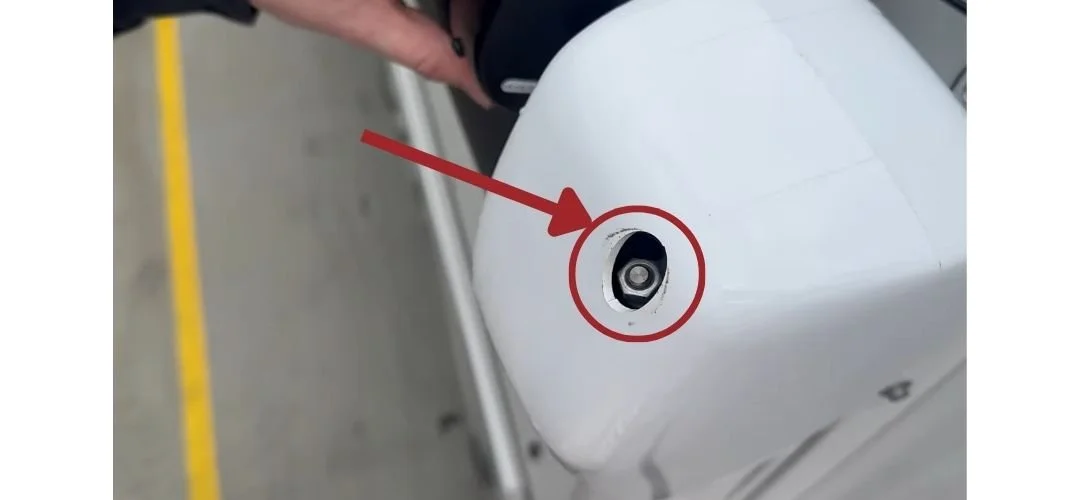
Many common electric RV awnings have a manual retract method, but the exact process can vary by awning brand and model. Most often, to start, you’ll want to look to the awning head to find a rubber grommet or access point. Behind it, you may see a nut that can be turned with a socket.
You can then use a socket and a regular drill to slowly retract the awning. (Important: we strongly advise that you do NOT use an impact gun. A regular drill is much safer for this.)
How to find the right awning parts
If you need a replacement motor, switch, or other awning part, you will need the information from the awning tag. On most awnings, that tag is either on the awning arm or the underside of the awning canopy.
The tag will probably include the model information, variant codes, and other details needed to identify the correct replacement parts. Do not guess on awning parts if you can avoid it. Using the wrong motor or component can create more problems.
When to call a professional
If you’re comfortable with basic tools and electrical testing, you’ll likely be able to handle a simple blown fuse or bad switch.
You should get help from an RV technician if:
The fuse keeps blowing
You smell burning or see melted wiring
The awning arms are bent or under heavy tension
You are not getting consistent voltage readings
The awning is stuck out and will not safely retract
You are unsure which part needs to be replaced
You are not comfortable testing 12-volt electrical components
Awnings may look simple, but they can involve electrical issues, motor failure, tight wiring, spring or strut pressure, and brand-specific parts.

Need help diagnosing your RV awning?
If you’d like any help with any of these solutions, or if you have any questions along the way, RVFix can help.
Give us a call at 844-667-8349.
We will connect you with a certified RV technician over a video call to help diagnose the issue, figure out what parts may be needed, and help guide you through the next steps. If warranty support is needed, we can help with that, too. And if the repair needs to be escalated for a hands-on approach from a professional, we can help coordinate with a service center or mobile technician.
That way, you are not stuck guessing, ordering the wrong parts, or leaving your RV in the shop longer than needed.
Watch the full video
Prefer to see the steps visually? Check out our full awning troubleshooting video below.
